
What is it?
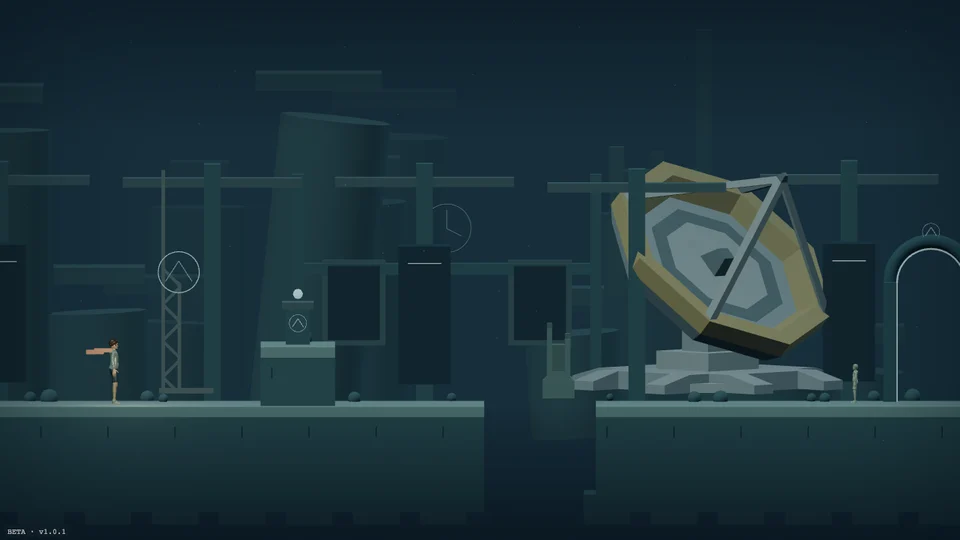
ECHOES is a solo cinematic adventure about following a missing child through a broken portal. A repeated mark, a stopped clock and a red scarf carry the story without dialogue.
Play six chapters and twelve scenes with jumps, hiding, crates, time shifts, mirrors and a lingering echo. Death returns you to the entrance of the current scene. The interface is currently in Korean; the visual story has no spoken dialogue.
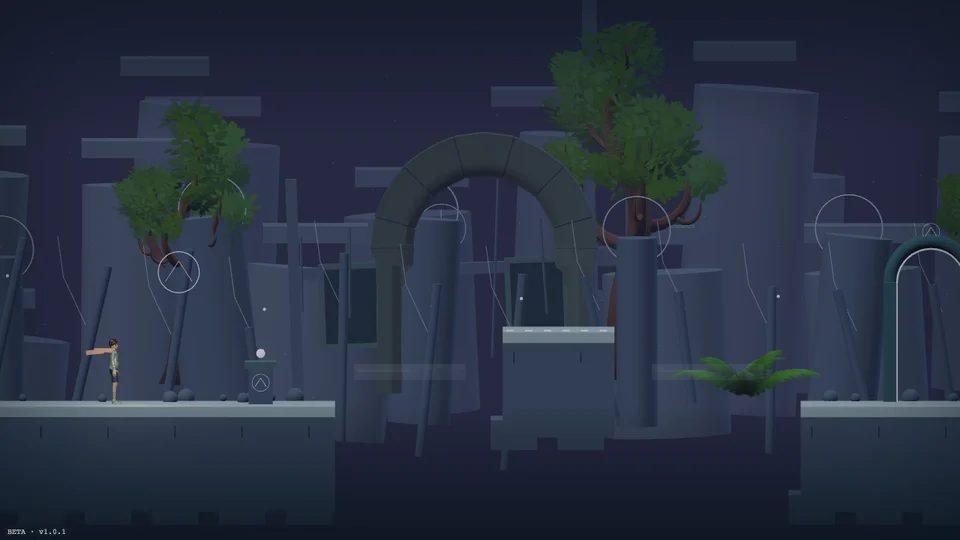
The strange skyline slowly becomes familiar: the observatory windows and its stopped clock remain in the ruins. Platform shapes and light direction also guide the next move.
Gameplay video and screens
How to play
- Move with the left stick or arrow keys and jump across ledges.
- Use E or the hand button near a mechanism. Hold it while moving to push a crate.
- Once you collect the lens, use X or the diamond button to shift time. A fall restarts the current scene.
Modes
- Story journey
- Six chapters and twelve scenes, with a chapter selector for reached chapters.
Good to know
- Hold jump for distance. Press jump again to climb a ledge.
- Crouch behind low walls and let the sentry light pass before moving.
Strategy tips
Read before jumping
Look for lit edges and nearby mechanisms. An elevated switch requires climbing first.
Short retries
A death resets the current scene, including its puzzle state and hazard timers.
At a glance
- Genre
- Explore & simulate
- Players
- 1
- Price
- Free
- Available languages
- Korean
Opens in Korean. - Platform
- Web browser (no install)
- Mobile
- Portrait and landscape supported with a virtual stick and action buttons.
Developer notes
Shared resources
CC0 Quaternius and Kenney models, shared GameNow music and input modules, and a pinned common menu, sharing, advertising and GA4 integration.
Update history
- First release: six chapters, twelve scenes, wordless vignettes, scene checkpoints and mobile/gamepad controls.
Questions and answers
Is there multiplayer?
This is a solo story. Share the public game link with friends; personal saves and account data stay private.
Which interface language is supported?
The current interface is Korean. The story uses scenes, movement and sound rather than spoken dialogue.
Further reading
Page updated: · See the update log